 SN Chemical Industries Ltd.
SN-NanoFloor
SN-NanoFloor is a high-gloss self-smoothing resin floor finish generally applied at 1mm for seamless, durable and refined floor finishes.
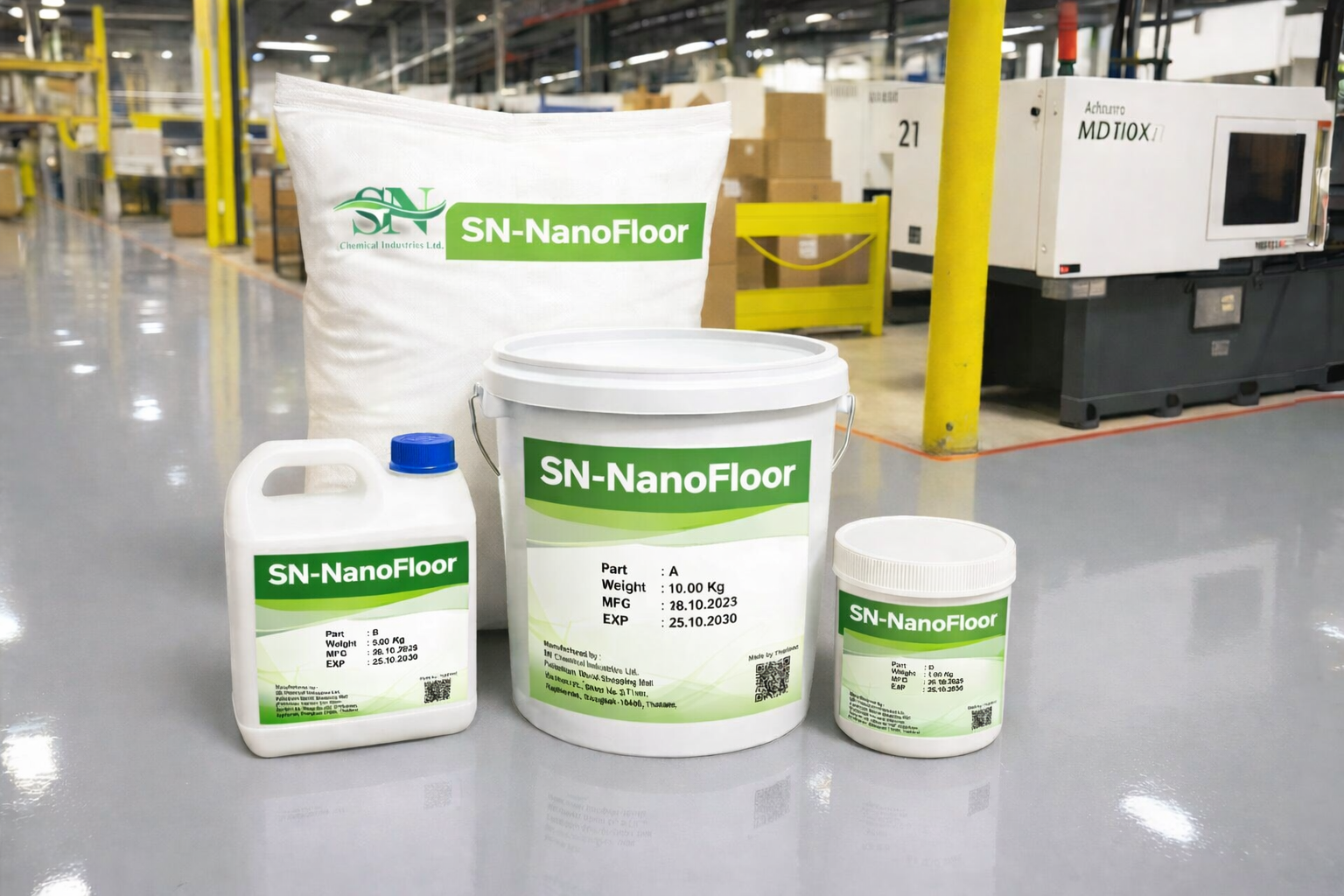
SN-NanoFloor — Full Technical Details
Product Description What it is
⌄
SN-NanoFloor is a high-gloss self-smoothing resin floor finish generally applied at 1mm.
Uses Where to use
⌄
SN-NanoFloor is formulated specifically for dry process areas where the floor is subjected to foot, trolley, pallet truck and/or rubber-wheeled forklift traffic.
- Laboratories
- Clean room environments
- Warehousing / storage areas
- Pharmaceutical, electronic, aerospace, automotive and printing plants
Benefits Performance
⌄
- Attractive, enhances working environment
- Hygienic – easy to clean
- Non-tainting, non-dusting
- Hard wearing floor finish
- Abrasion resistant
- High chemical resistance grade available
- Wide range of colour
- Solvent free, low odour
Standard Color Chart Options
⌄
Substrate Compatibility
⌄
SN-NanoFloor is suitable for application over concrete, wood, tile or metal. Not recommended on asphalt or painted surface.
Substrate Requirements Before you start
⌄
- Substrate must be sound, dry and free from laitance, dust, oil, grease and curing compounds.
- Concrete should achieve adequate compressive strength and be properly cured.
- Moisture content must be within acceptable limits for resin flooring systems.
- Provide correct slope/drainage where needed; avoid ponding water in service.
System Options Build-ups
⌄
Typical system build-ups may include primer + self-smoothing layer + optional seal coat depending on performance needs.
| System | Typical Thickness | Recommended Use |
|---|---|---|
| Standard (Primer + NanoFloor) | ~1.0 mm | Dry areas with foot/trolley traffic |
| Heavy Duty (Primer + NanoFloor + Seal) | 1.0–1.5 mm | Higher abrasion resistance, easier cleaning |
| Chemical Grade (As specified) | Project-specific | Enhanced chemical resistance requirements |
Packaging Supply
⌄
- Available in pre-measured packs for consistent mixing ratio.
- Pack size depends on selected grade/system (confirm at ordering).
Coverage Consumption
⌄
Coverage depends on substrate profile, porosity, temperature and application method.
- Self-smoothing coat (1 mm): typical consumption varies by density and surface profile.
- Primer: depends on porosity; multiple coats may be needed on very porous concrete.
Surface Preparation Bond
⌄
- Mechanically prepare concrete by grinding/shot-blasting to expose sound substrate.
- Remove weak layers, laitance and surface contaminants completely.
- Repair holes and cracks using suitable repair mortars/epoxy filler before priming.
- Vacuum clean thoroughly; dust reduces adhesion.
Priming Base coat
⌄
Apply a compatible primer to seal substrate and promote adhesion. Broadcast sand may be used to create a mechanical key where required.
- Apply evenly; avoid ponding.
- Do not overwork the primer once it starts to set.
- Proceed with topping coat within recoat window.
Mixing Ratio
⌄
- Mix full packs only (unless accurate weighing equipment is used).
- Use a slow-speed drill with suitable paddle.
- Mix until uniform, scraping sides/bottom to ensure consistency.
- Avoid air entrapment by keeping paddle submerged.
Pot Life Working time
⌄
Pot life varies with temperature and humidity. Higher temperatures reduce working time.
Application How to apply
⌄
- Pour mixed material onto primed surface and spread with notched trowel/squeegee.
- Roll with spike roller to release trapped air and level the surface.
- Maintain wet edge to avoid lapping lines.
- Use spiked shoes where needed.
Hardening & Curing After application
⌄
Allow system to cure properly before service. Times depend on temperature, ventilation and system build-up.
- Protect from dust, water and condensation during cure.
- Avoid heavy traffic until fully cured.
Shelf Life & Storage Keep it safe
⌄
- Store in unopened original packaging in cool, dry conditions.
- Keep away from direct sunlight and frost.
- Rotate stock (first in, first out).
Cleaning Up Tools
⌄
- Clean tools immediately after use with suitable cleaner/solvent (as recommended for the system).
- Cured material can only be removed mechanically.
Important Notes Read this
⌄
- Application must be carried out by trained applicators.
- Ambient and substrate temperatures must be within recommended range.
- Do not apply during rain, high humidity or condensation risk (dew point).
- Always verify compatibility with existing coatings/substrates by trial area.
Caution / HSE Safety
⌄
Refer to Safety Data Sheet (SDS) for full hazard and handling information.
Physical / Chemical Properties Technical
⌄
| Property | Typical Value | Notes |
|---|---|---|
| Finish | High-gloss | Decorative seamless surface |
| Application thickness | ~1 mm | System dependent |
| Odour | Low | Solvent free / low odour system |
| Traffic resistance | Foot / trolley / forklift (rubber wheels) | Dry process areas |
| Chemical resistance | Grade options available | Confirm for specific chemicals |